
Latest posts
-
SVC vs. DVC Explained: Subwoofer Voice Coils Demystified
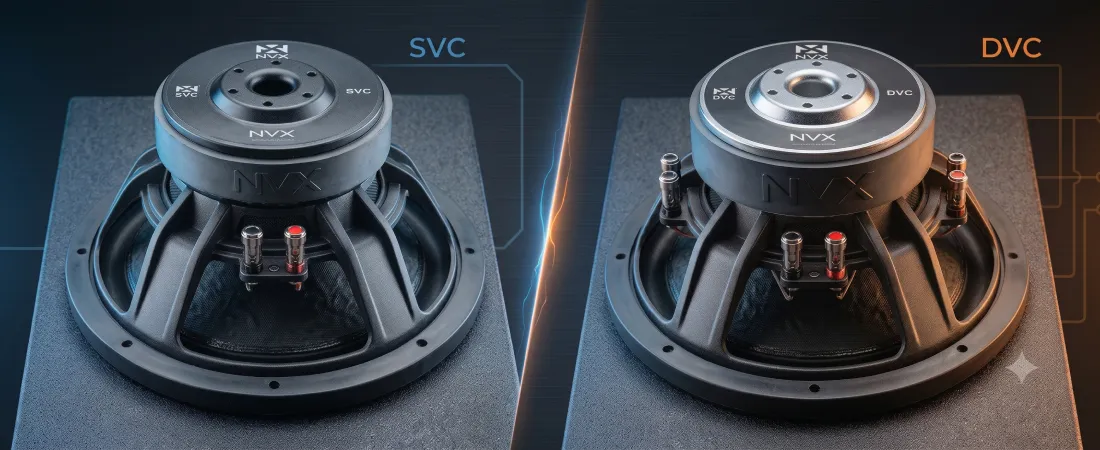
When shopping for a subwoofer, you will immediately encounter two terms: SVC (Single Voice Coil) and DVC (Dual Voice Coil). For beginners, this choice is often a major source of confusion. Many assume that a dual voice coil subwoofer is automatically “better,” plays louder, or handles more power than a single voice coil model. In
-
Matching Amp Power to Subwoofers: Balancing Current and Cone Control
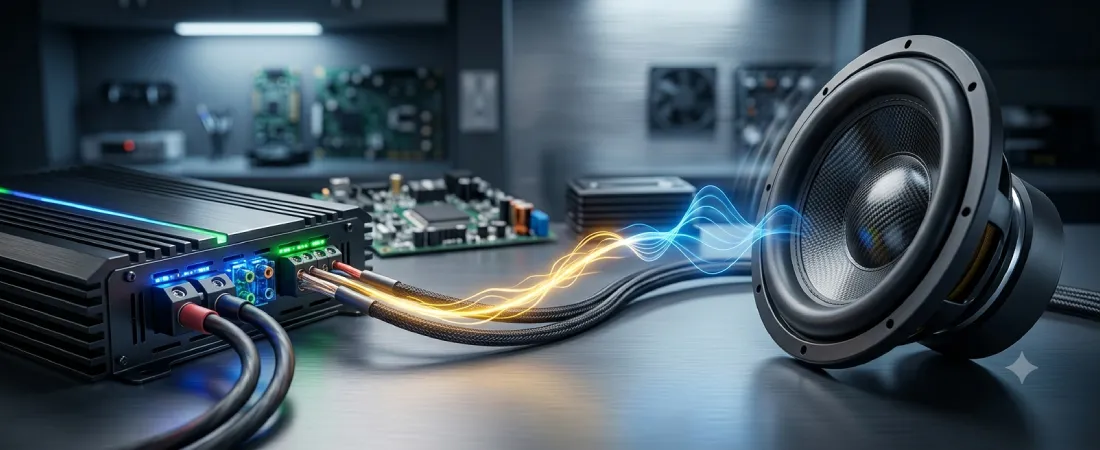
Pairing an amplifier with a subwoofer is one of the most critical steps in building a car audio system. Many beginners make the mistake of choosing an amplifier based on the “Max” or “Peak” wattage printed on the box, or they assume any amplifier will work as long as it turns on. In mobile electronics,
-
Crossovers Explained: The Traffic Controllers of Sound
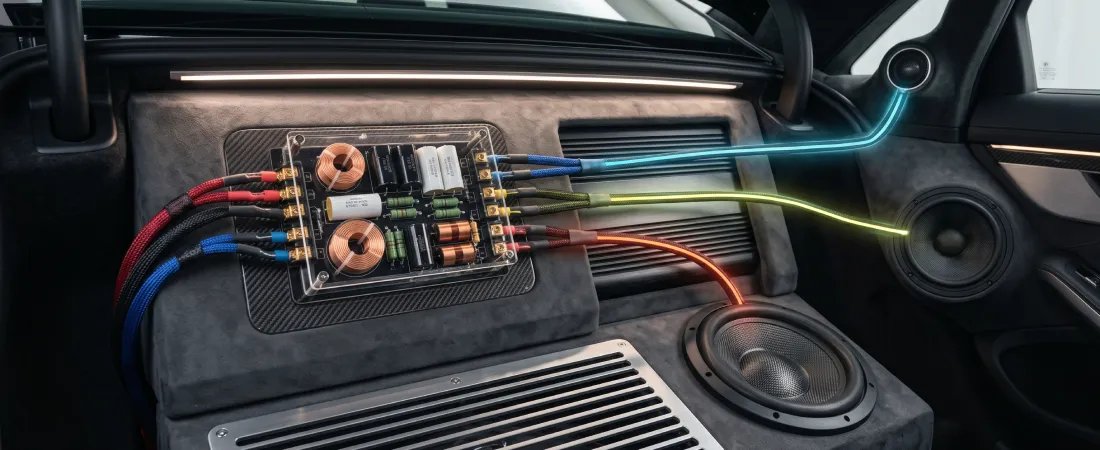
In a car audio system, music is not just a single continuous stream of sound; it is a complex spectrum of electrical frequencies ranging from deep sub-bass (20Hz) to ultra-high treble (20,000Hz). No single speaker is physically capable of reproducing this entire range cleanly. This is where a crossover steps in. A crossover acts as
-
Why Bigger Amps Don’t Kill Speakers: The Truth About Headroom
One of the most persistent myths in car audio is that connecting a high-wattage amplifier to lower-wattage speakers will instantly destroy them. Beginners are often warned about the dangers of “overpowering” and are told that “underpowering” a speaker is safer. In reality, the exact opposite is true. You cannot damage a speaker simply by providing
-
Series vs. Parallel Wiring: Managing Your Amplifier’s Load
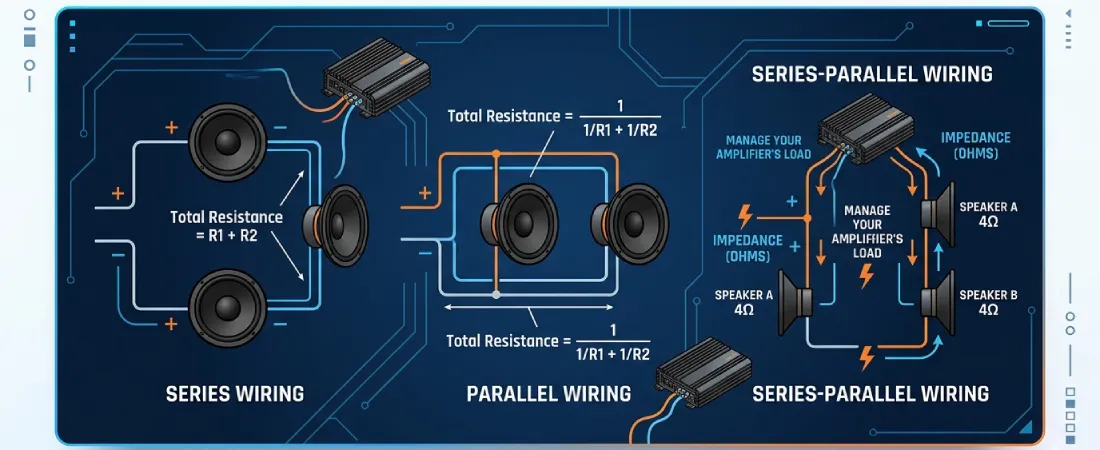
When installing multiple subwoofers or configuring a dual voice coil driver, the way you connect the speaker wires determines the electrical resistance the amplifier “sees.” This electrical resistance is called Impedance. Connecting subwoofers incorrectly can either choke your amplifier’s power output or force the amplifier to run below its stable limits, leading to overheating and
-
Sealed vs. Ported Boxes: Decoding the Enclosure Debate
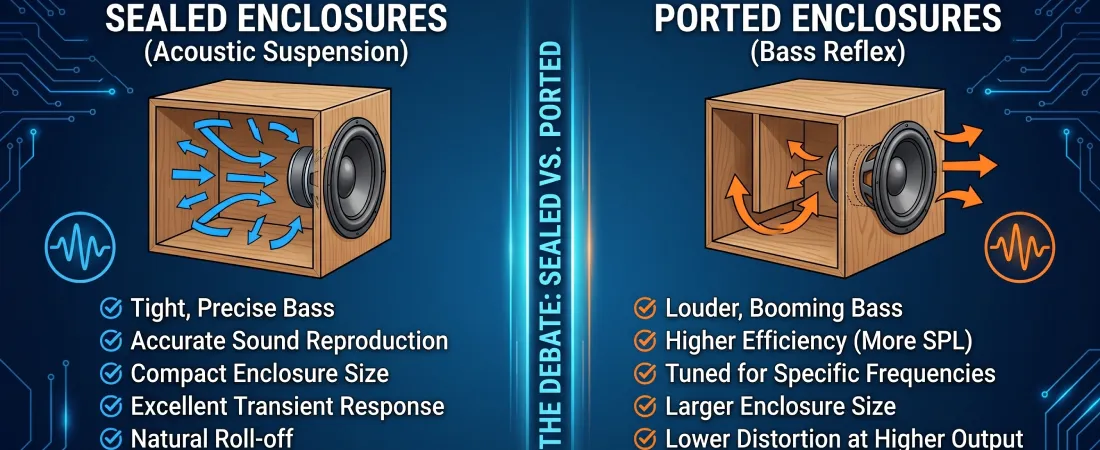
In car audio, the “best” subwoofer is only as good as the box it sits in. The enclosure is a functional component of the system that manages the air pressure created by the back of the speaker cone. Most enthusiasts fall into two camps: those who prefer the “tight” and accurate response of a sealed
-
Matching Amps to Speakers: The Rules of System Synergy
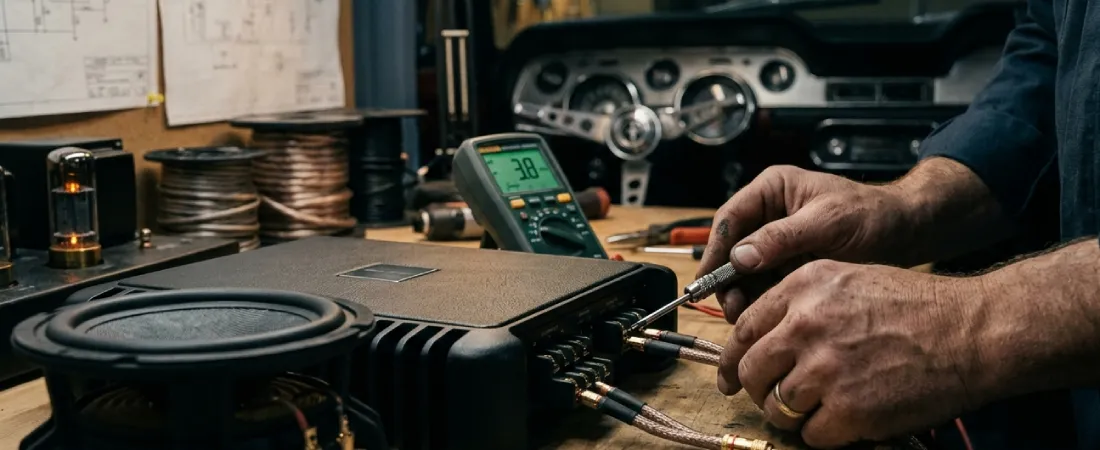
One of the most common questions in car audio is, “Which amplifier do I need for these speakers?” Many beginners believe that matching brands is enough, but true compatibility is determined by physics and electrical engineering. Matching amplifiers to speakers (or subwoofers) is about balancing two critical factors: Impedance (Ohms) and Continuous Power (RMS). When
-
Why Speakers Blow: Understanding Equipment Failure
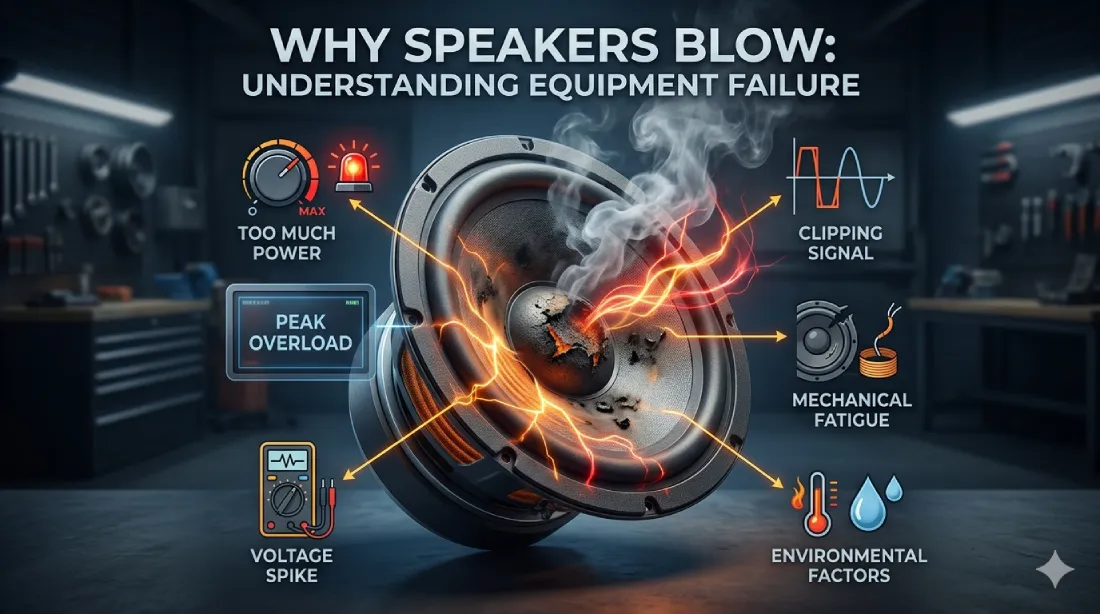
In car audio, the phrase “I blew my speakers” is common, but the actual mechanics of the failure are often misunderstood. Most beginners assume that having an amplifier with “too much power” is the primary culprit. While overpowering is a factor, most speakers fail due to specific electrical or mechanical stresses caused by poor system
-
What Is Clipping: The Silent Speaker Killer
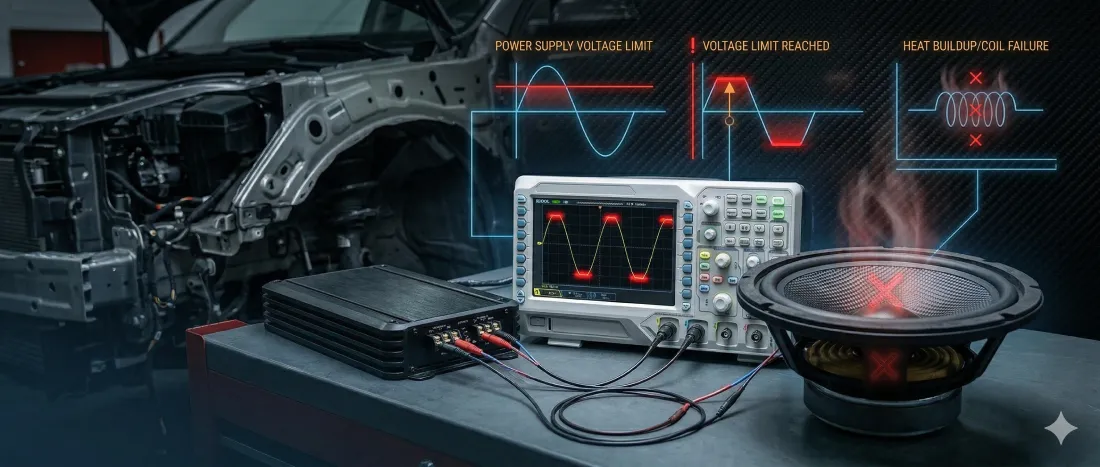
In car audio, “clipping” is the most common reason speakers and subwoofers fail. Most beginners assume that a speaker “blows” because the amplifier is too powerful. In reality, speakers are more often destroyed by an underpowered amplifier being pushed beyond its limits. Understanding clipping is the key to achieving a system that plays loudly and
-
Speaker Sensitivity Explained: The “Efficiency” Fundamental
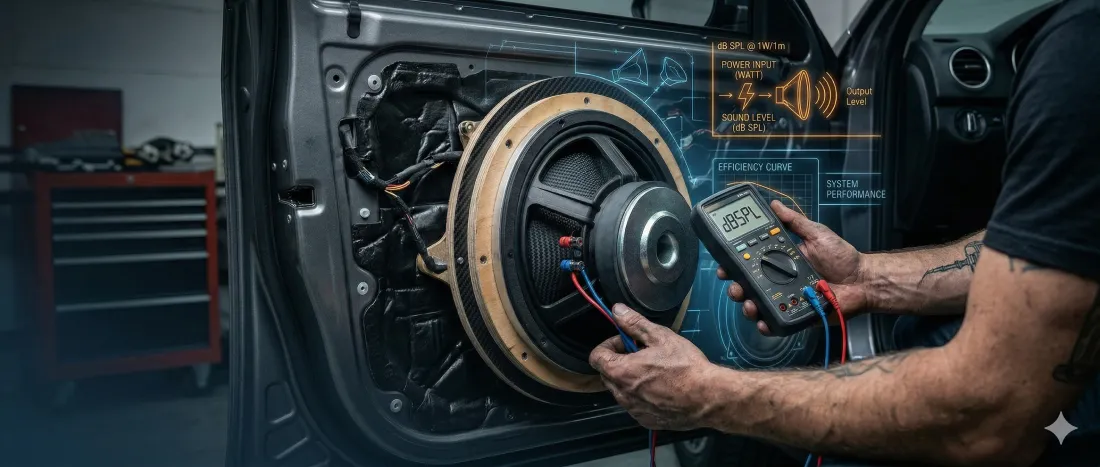
In the world of car audio, beginners often focus exclusively on wattage, assuming a “500-watt” speaker is naturally better than a “100-watt” model. However, wattage only tells you how much thermal energy a speaker can handle before failing; Sensitivity tells you how much sound it actually produces. Understanding this fundamental is the only way to