
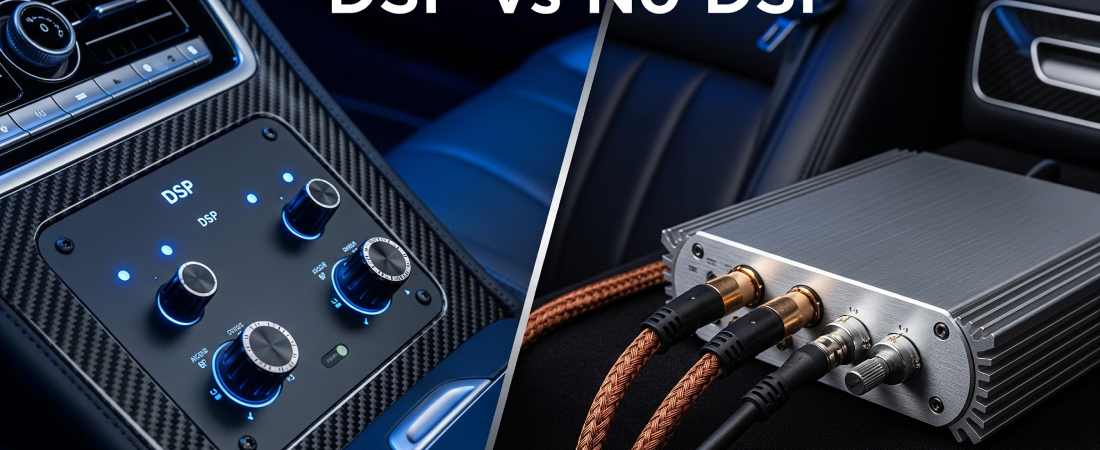
Digital signal processors (DSPs) are one of the most powerful tools available for tuning a car audio system. But many systems operate without one. So do you actually need a DSP?
The answer depends on your system goals, vehicle acoustics, and how much control you want over tuning.
What Is a DSP?
A digital signal processor modifies the audio signal before it reaches your amplifiers and speakers.
- Equalization (EQ)
- Time alignment
- Active crossovers
- Signal delay
- Channel routing
These tools allow the system to compensate for the uneven listening environment inside a vehicle. Learn more in Signal Flow Explained.
What Is a Non-DSP System?
A non-DSP system sends the signal directly from the head unit to the amplifier and speakers.
Typical signal path:
Head Unit → Amplifier → Speakers
Tuning is limited to basic EQ and crossover controls.
Key Differences
Control
DSP systems allow detailed tuning of frequency response and timing.
Soundstage
Time alignment allows speakers to reach the listener simultaneously, improving stereo imaging.
Flexibility
DSP allows active speaker setups where each speaker has its own amplifier channel.
Complexity
DSP systems require knowledge and tuning effort to reach their full potential.
When DSP Makes a Huge Difference
- Factory head unit integration
- Active speaker systems
- Multi-amplifier builds
- Sound quality focused systems
When You May Not Need a DSP
- Simple daily listening upgrades
- Coaxial speaker setups
- Basic head unit tuning available
Common Mistakes
- Adding DSP without understanding tuning
- Ignoring proper gain structure (What Gain Actually Does)
- Using DSP to fix installation problems