
Latest posts
-
Downfiring vs Forward-Firing Subs
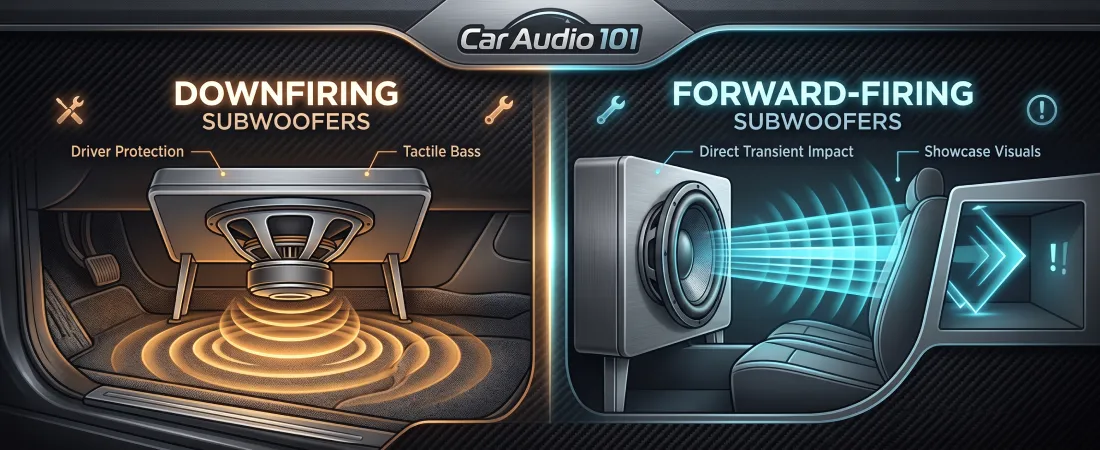
Choosing the orientation of your subwoofer enclosure is one of the most critical decisions when planning a car audio build. While box volume and port tuning establish the baseline acoustic output, the direction the subwoofer cone faces directly influences boundary loading, cabin gain, tactile feedback, and driver protection. Enthusiasts frequently debate whether aiming a subwoofer
-
Box Size vs Sound

The internal volume of a subwoofer enclosure is one of the most critical factors determining how bass sounds in your vehicle. While many enthusiasts believe that maximum bass output is purely a function of amplifier wattage and driver diameter, the air volume inside the cabinet directly controls how the speaker cone physically moves. An enclosure
-
Subwoofer Box Bracing & Air Leaks
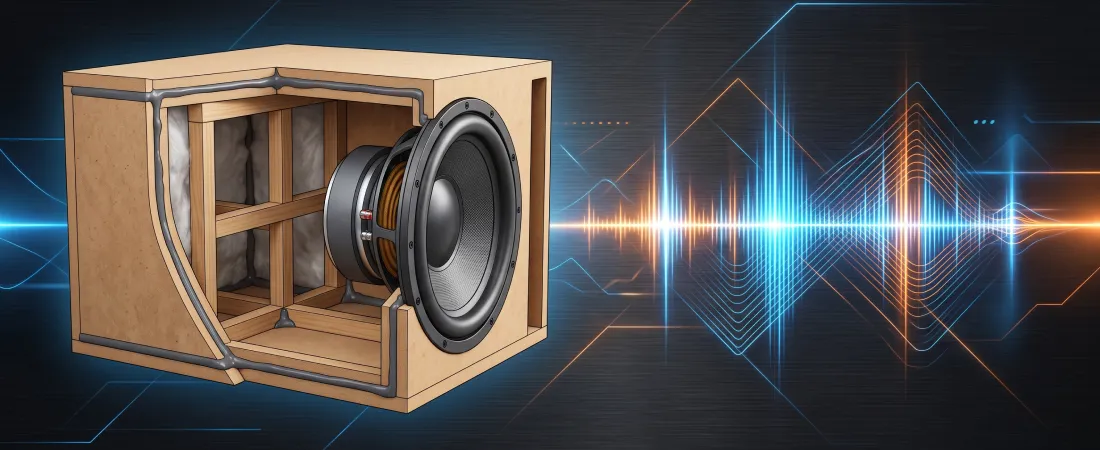
Constructing a subwoofer enclosure requires more than just cutting wood to match a calculated internal volume. Even if your net volume (Vb) matches software specifications perfectly, a box that flexes or leaks air will fail to deliver tight, accurate low-frequency output. Understanding how panel flex and air leaks degrade acoustic performance allows you to build
-
Port Tuning Basics

Port tuning is the engineering practice of designing a vented enclosure so that air inside the port resonates at a specific frequency. Unlike sealed enclosures that rely solely on cone displacement to move air, a ported box harnesses energy from the rear of the subwoofer cone, redirecting air through a tuned duct to boost low-frequency
-
SVC vs. DVC Explained: Subwoofer Voice Coils Demystified
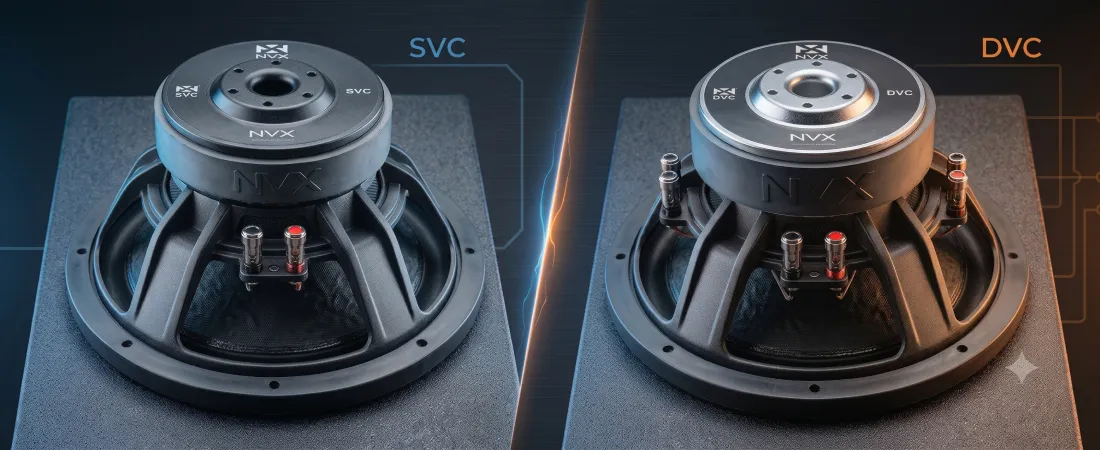
When shopping for a subwoofer, you will immediately encounter two terms: SVC (Single Voice Coil) and DVC (Dual Voice Coil). For beginners, this choice is often a major source of confusion. Many assume that a dual voice coil subwoofer is automatically “better,” plays louder, or handles more power than a single voice coil model. In
-
Series vs. Parallel Wiring: Managing Your Amplifier’s Load
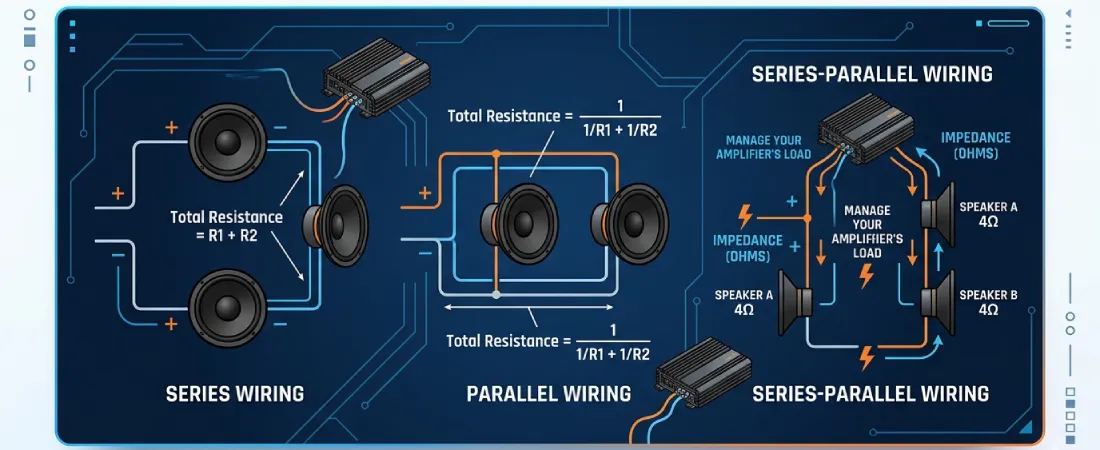
When installing multiple subwoofers or configuring a dual voice coil driver, the way you connect the speaker wires determines the electrical resistance the amplifier “sees.” This electrical resistance is called Impedance. Connecting subwoofers incorrectly can either choke your amplifier’s power output or force the amplifier to run below its stable limits, leading to overheating and
-
Sealed vs. Ported Boxes: Decoding the Enclosure Debate
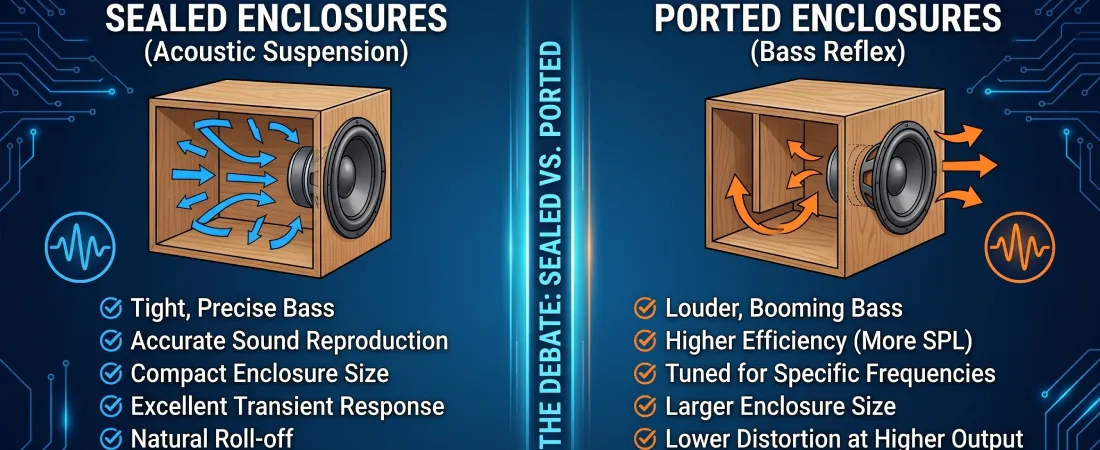
In car audio, the “best” subwoofer is only as good as the box it sits in. The enclosure is a functional component of the system that manages the air pressure created by the back of the speaker cone. Most enthusiasts fall into two camps: those who prefer the “tight” and accurate response of a sealed
-
Subwoofer Basics

Subwoofers exist to reproduce low-frequency sound that standard speakers cannot handle efficiently. Bass frequencies require more air movement, and subwoofers are designed specifically for that task. A well-designed subwoofer system adds impact, depth, and balance. A poorly designed one creates distortion, rattles, and blown equipment. What a Subwoofer Does Subwoofers handle low frequencies, typically from